
| Institute Comments on the Draft Salton Sea Environmental Impact Report
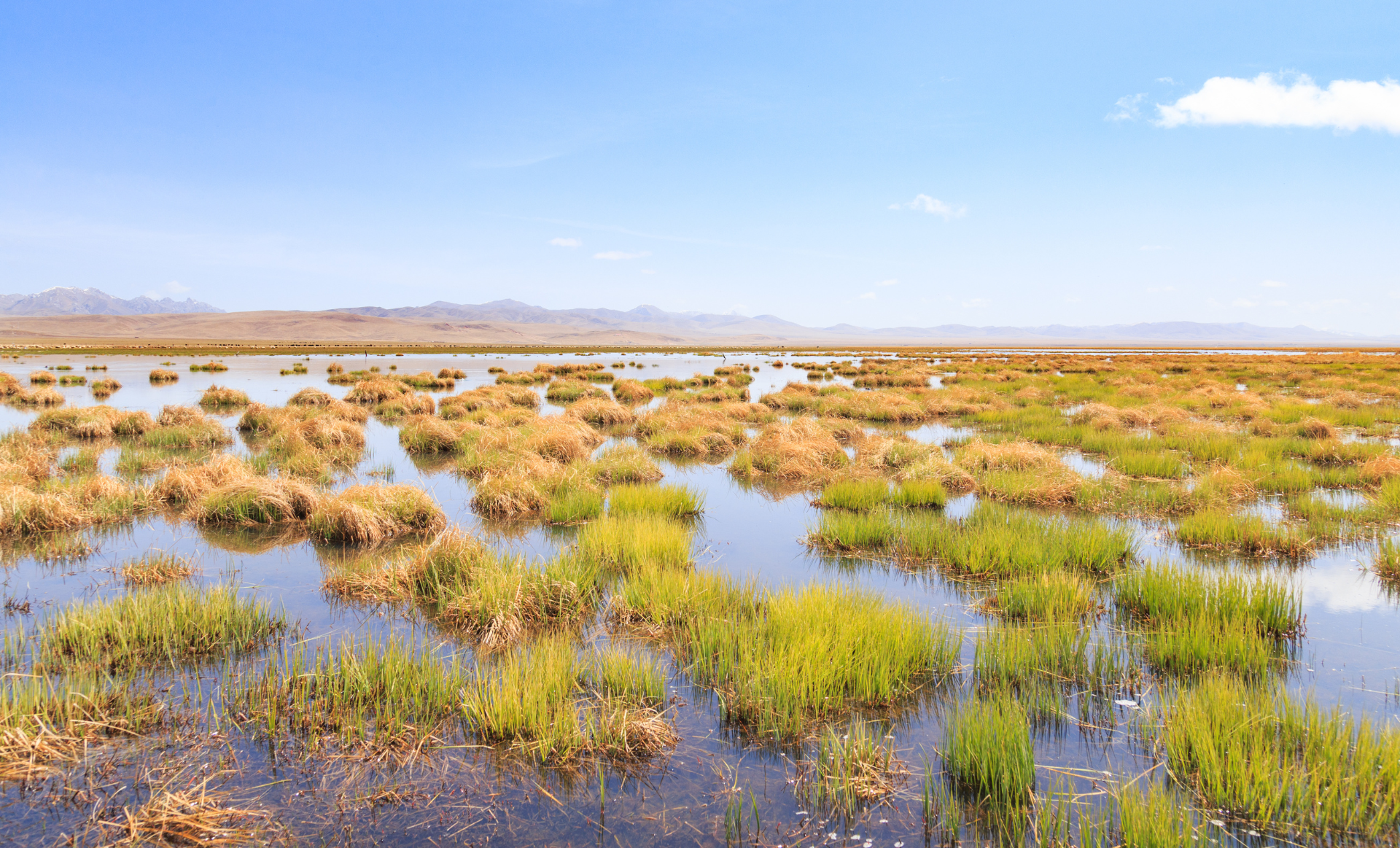
The Pacific Institute has engaged actively in Salton Sea restoration efforts for nine years, producing reports, submitting extensive comments on previous restoration documents, and developing the first proposal to recognize that a partial-Sea plan is the only feasible restoration approach. Last fall, California’s Departments of Water Resources and of Fish & Game jointly released a draft Programmatic Environmental Impact Report (PEIR) for the Salton Sea Ecosystem Restoration Program. The PEIR assesses eight different plans to restore the Salton Sea.
"The PEIR contains most of the elements necessary to craft a preferred alternative, but the state will need to do some mixing and matching to develop a reliable project that meets legal requirements to maximize habitat and protect human health," said Michael Cohen, Senior Research Associate for the Pacific Institute and author of "HAZARD: The Future of the Salton Sea Without a Restoration Plan."
On January 16, 2007, the Pacific Institute joined numerous groups in submitting general comments on the PEIR (PDF). The Institute also submitted detailed comments on the PEIR (PDF). Learn more
Surveying Corporate Social Responsibility
In collaboration with the ISEAL Alliance, AccountAbility, Global Reporting Initiative, and International Institute for Sustainable Development, the Pacific Institute recently conducted a survey on the Corporate Social Responsibility (CSR) movement. The Institute surveyed civil society groups and other stakeholders on the current status of the various global voluntary CSR instruments and initiatives.
In “Results of Survey on the Current and Future CSR Landscape,” the Institute found that stakeholders share a consensus view of the current and future CSR landscape. In particular, respondents mostly agreed on the challenges associated with the existing CSR initiatives (e.g., lack of funding and resources for effective participation and lack of clear definition of the CSR landscape), as well as the future direction of CSR landscape (e.g., more involvement of business and governments, greater role of voluntary CSR standards and initiatives). The results will serve as a foundation for developing a common vision of a desired CSR landscape. Download the findings (PDF)
For more news on international standards, read the latest issue of the International NGO Network on ISO (INNI) Online Update
Calif. Taxpayers Shouldn't Give a Dam, Much Less 2
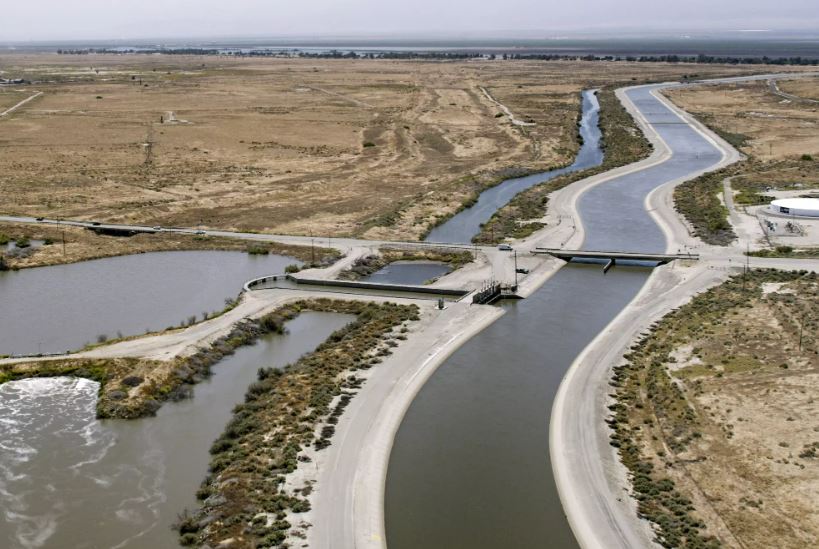
Spending taxpayer money to build new dams in California is a misguided policy, according to the Pacific Institute, an Oakland-based nonpartisan think-tank. The Schwarzenegger Administration is considering building two new dams in the state. Yet the Institute’s research shows that curtailing existing water waste would free up far more water for less money and with less environmental harm than new dams.
“New dams are an expensive and environmentally unsound source of water in California,” said Peter Gleick, President and Co-Founder of the Pacific Institute. “We applaud the Governor’s interest in dealing with the impacts of climate change on our water resources, but the best way to do that is through water efficiency improvements and better management, not asking taxpayers to build billion dollar projects that don’t help our water problems.” Continued
More: “New Dams: Necessity, or Billion-Dollar Mistakes?” Stockton Record, 1/21/07
U.S. Dumps California Water Conservation Plan
For six years the Bush administration has refused to take any serious actions nationwide to improve energy and water efficiency. Now it is actively thwarting the efforts of Californians to take such actions on our own. California, the federal government would have us know, does not have a compelling interest in conserving water or energy.
In 2002, then-Governor Gray Davis approved a Legislature-passed water-efficiency standard for residential washing machines. Although the federal government currently has no water standard for washing machines, states must apply for a federal waiver before implementing their own. The Schwarzenegger administration filed for such a waiver in 2005. The U.S. Department of Energy sat on this waiver request for more than a year, only to deny it on Dec. 28 -- three days before California's rules were to take effect and at a time when people were unlikely to notice. Continued.
More: “Washing Machine Woes” Capital Public Radio's Insight, 1/17/07
This Month at the Integrity of Science blog
January was a busy month over at Pacific Institute's newly moved Integrity of Science blog. If you're not reading it, here's a few highlights from the past month:
Subscribe to the blog! Click here, enter your e-mail address, and on the next page scroll down and select Integrity of Science. |
|
THIS JUST IN
Washington’s Attacks on Science “Pervasive”
Gleick Provides Testimony to Senate Hearing
Political distortions of the scientific process have undergone a dramatic rise in Washington over the past six years, according to the Senate testimony of Dr. Peter Gleick, president of the Pacific Institute. CONTINUED |
UPCOMING
2/7/07. Salton Sea [Ontario, Calif.] Michael Cohen will participate in the California Resources Agency's Salton Sea Advisory Committee preferred alternatives workgroup, to discuss the selection of a preferred alternative for the Ecosystem Restoration Program.
2/16/07. Environmental Justice [San Francisco, Calif.] The Pacific Institute is co-sponsoring the event “Celebrate and Consolidate Environmental Justice Victories.” The reception includes a presentation of new findings on the 20th Anniversary of the landmark 1987 study, Toxic Wastes and Race, by Dr. Robert Bullard, Dr. Beverly Wright, and Dr. Robin Saha, and the opportunity to be in solidarity with Youth United for Community Action in its struggle against Romic in East Palo Alto. More information at www.crpe-ej.org
2/16/07. Water Efficiency [San Francisco, Calif.] Peter Gleick will be presenting “Water Crisis in Agriculture: How to Produce More with Less” at the American Association for the Advancement of Science (AAAS) Annual Meeting
2/20/07. Environmental Justice [Richmond, Calif.] The Institute-led Ditching Dirty Diesel Collaborative is co-sponsoring the launch of the landmark study “Still Toxic After All These Years: Air Quality and Environmental Justice in the Bay Area,” with the Bay Area Environmental Health Collaborative. The report is authored by the Center for Justice, Tolerance & Community at UC Santa Cruz.
2/20/07. Water Privatization [Indianapolis, Ind.] Ian Hart will present the findings of “Beyond Privatization: Restructuring Water Systems to Improve Performance” at the Indiana Section AWWA 99th Annual Conference.
2/22/07. Colorado River [Sacramento, Calif.] Michael Cohen will participate on the Colorado River – Status Report on a River Reoperation Plan panel at the Water Education Foundation's Executive Briefing
2/26/07. Freight Transport [Long Beach, Calif.] Swati Prakash and Margaret Gordon will present the findings of the “Paying with Our Health” report at the annual “Faster Freight, Cleaner Air” conference co-sponsored by the U.S. EPA and industry associations.
2/27/07. Salton Sea [Sacramento, Calif.] Michael Cohen will participate in the California Resources Agency's Salton Sea Advisory Committee, to discuss next steps for the Ecosystem Restoration Program, including funding options and the construction of 'early start' habitat.
2/28/07. Colorado River Delta [Yuma, Ariz.] Michael Cohen will meet with other stakeholders to discuss potential restoration opportunities in the Laguna Reach of the Colorado River, the northernmost extent of the river's former delta.
3/1/07. Desalination [Huntington Beach, Calif.] Ian Hart will present the findings of “Desalination, With a Grain of Salt” at a public meeting sponsored by Residents For Responsible Desalination. |