
|
California Water 2020: A Sustainable
Vision
By Peter H. Gleick, Penn Loh, Santos V. Gomez, and Jason
Morrison
Web-published May 2005, originally published May 1995
Executive Summary
California's water future depends on choices that are being
made now or must be made within the next few years. It is
increasingly obvious that the water policies that helped
the state to become the agricultural and economic giant
it is today are not up to the challenges of the 21st century.
Yet those responsible for managing and protecting the state's
freshwater resources continue to plan on the basis of outdated
and inappropriate assumptions.
This report -- the result of a year-long investigation
into California's water future -- presents a unique vision
of a truly sustainable water future and discusses ways to
realize such a vision.
The Problem: California's current water use is unsustainable.
In many areas, ground water is being used at a rate that
exceeds the rate of natural replenishment. This is causing
land to subside and threatening some aquifers with possible
collapse. The use of ground water is almost entirely unmonitored
and uncontrolled, hindering rational management. Urban water
use is inefficient and poorly managed. Agricultural policies
encourage the production of water-intensive, low-valued
crops. Environmental water needs are poorly understood and
rarely met. Fish and wildlife species are being driven toward
extinction and habitats are being destroyed by withdrawal
of water, as well as by development.
According to official projections, these and related
problems will continue indefinitely.
The California Department of Water Resources, which produces
the "California Water Plan," operates on the assumption
that in the year 2020:
o California will grow the same kinds of crops, on about the
same amount of land, as it does now;
o Rapidly growing urban populations will continue to waste
large amounts of water on inefficient toilets and sinks, and
on watering household and municipal lawns;
o Many aquifers will continue to be pumped more rapidly than
they are replenished;
o Millions of acre-feet of treated wastewater will continue
to be dumped into the oceans rather than being recycled and
reused;
o Water needed to maintain California ecosystems and aquatic
species will come and go with the rains and with human demands;
and
o Droughts and floods will have ever greater effects on society
and the natural environment.
In short, official projections are that water demand will
exceed available supplies by several million acre feet --
a gap projected in every official "California Water
Plan" produced since 1957.
We believe that state water planners have been planning
for a future that is increasingly unlikely and undesirable.
Traditional water planning assumes that the basic conditions
affecting supply and demand will remain the same as they
are today. They do not allow for the fact that social structures,
values, and desires will change - as they are already changing.
Even ignoring the difficulty of projecting future populations
and levels of economic activities, this conventional approach
to water resources planning has many limitations. Perhaps
the strongest evidence of the inadequacy of this approach
is the fact that it routinely produces scenarios with unsustainable
conclusions, such as water demand exceeding supply and water
withdrawals unconstrained by environmental or ecological
limits. The costs to the state of such a future will include:
o lost industrial competitiveness and revenue;
o destroyed natural resources;
o continuing uncertainty about long-term water supplies;
and
o further ill will among urban, agricultural, and environmental
interests.
These costs can be avoided. Trend is not destiny, and official
projections are not inevitable outcomes. It is time to develop
new tools and approaches to California's water problems.
California Water 2020: A Sustainable
Vision
A prosperous, healthy California is possible by 2020, with
enough water for urban dwellers, a vibrant farm sector,
and a robust environment. Without severely impacting any
particular sector, groundwater overdraft can be eliminated,
urban and agricultural water use can be made more efficient
and productive, and California's natural ecosystems can
be protected and restored. Figure ES-1 compares the state's
future water supply and demand as estimated in this report
and as projected by the official California Water Plan.
In 2020, urban water demand per person could be far lower
than it is today, helping to meet the demands of nearly
50 million residents, if current population projections
are accurate. Agricultural production can shift away from
today's emphasis on low-valued, water-intensive crops, increasing
farm revenue while decreasing farm water needs. Groundwater
overdraft can be completely eliminated. And the environment
can benefit from more comprehensive and flexible water management.
This sustainable vision for the year 2020 would produce
a more stable business environment, reduce uncertainty over
water supplies, and increase the state's economic vitality
and competitiveness. At the same time, the process of planning
and managing the state's water resources can be made more
democratic and open, bringing in whole segments of the population
that have not previously been included.

What is Sustainable Water Use?
There has been plenty of rhetoric recently around the terms
"sustainability" and "sustainable development."
What is sustainability in the context of freshwater resources
and why do we use the term here? We define sustainable water
use as: "the use of water that supports the ability
of human society to endure and flourish into the indefinite
future without undermining the integrity of the hydrological
cycle or the ecological systems that depend on it."
California's water resources should be managed so that
today's human and environmental needs are met and so that
the resource base is maintained for the future. Current
water management practices are unsustainable because they
produce groundwater overdraft, water-supply contamination
by chemicals, loss of aquatic species and unique habitats,
and other problems that directly diminish the state's natural
resources. To continue these practices is to squander an
inherited fortune, leaving nothing for our children.
Is sustainability a scientific concept? Not exactly. It
is a social goal, much like equity, liberty, or justice.
It implies an ethic. Public value judgments must be made
about which needs and wants should be satisfied today --
and what changes must be made to ensure a legacy for the
future.
In this study we present a set of sustainability criteria
for water. They were developed over the past year in discussions
among people with a wide range of interests, and they embody
these value judgments: that humans and natural environments
should have access to the minimum amount of water necessary
for survival, that the renewable characteristics of water
resources should not be impaired, and that the process of
water planning and management should be democratic, fair,
and open.
An ethic of sustainability will require a fundamental change
in how we think about water. Rather than trying to find
the water to meet some projection of future desires, we
must plan to meet present and future human and ecological
needs with water that is available. This is an essential
change in thinking, and it will require consideration at
the highest levels. Such a shift does not mean we must diminish
our quality of life. On the contrary, by securing a sustainable
future, a prosperous, healthy California is possible by
2020.
How Do We Get There?
To realize this positive vision no significant new supply
infrastructures need be built, nor are any drastic advances
in technology necessary. No "heroic" or extraordinary
actions are required of any individual or sector. The changes
necessary to achieve a sustainable water future for California
can be brought about by encouraging and guiding positive
trends that are already under way. They can be accomplished
by applying technological innovations gradually and incrementally
at this time of continuing evolution in personal values
and culture. These are already common characteristics of
California society.
California's water policies can and must be substantially
reshaped over the next quarter-century. In many cases the
job has already begun and we need only nurture existing
trends. Providing safe, clean water in the arid West has
always required financial, institutional, and human investments,
and some agencies, individuals, and organizations are likely
to resist the short-term costs of any new approaches. It
is imperative, therefore, that the long-term costs of not
taking these actions -- measured by the costs of new infrastructure
construction, adverse impacts on human and environmental
health, and the political costs of endless social conflict
over water -- also be brought into the equation. A sustainable
future can be achieved. Whether it will be achieved depends
on the public and their elected officials.
Major Conclusions
California's current water use is unsustainable. Current
water planning fails to address the water problems of the
21st century. Continuing down the current path will lead
to worsening social, economic, and environmental conflicts
over water.
o Current policies reduce future flexibility and increase
the risk of economic instability due to disruptions in water
supply;
o Current policies produce uncertainty and a risk of future
unreliability during periods of drought and shortage;
o Traditional planning leads to a large gap between water
supply and expected demand, encouraging construction of
new supply infrastructure.
California can achieve a more sustainable pattern of
water use by 2020 without severe negative impacts on any
particular sector. The urban sector can become far more
efficient and save millions of acre-feet of water.
o Average residential water use in 2020 could be 46 percent
lower than the current 137 gallons per person per day, using
only existing technology;
o Use of reclaimed water can increase from 0.4 million acre
feet in the mid-1990s to 2 million acre-feet in 2020 and
satisfy many urban demands;
o Industrial water-use efficiency could increase 20 percent
over today's efficiency.
Modest re-organization of California's agricultural
sector can save millions of acre-feet of water.
o The agricultural sector can be more efficient, with lower
total water demand and higher agricultural revenues.
o Groundwater overdraft can be eliminated with modest changes
in cropping patterns.
o By 2020, with modest shifts in cropping patterns, agricultural
net water demand could decline by 3.5 million acre-feet
while farm income rises by $1.5 billion (1988 dollars).
Innovative water management is necessary to protect
California's natural resources.
o By 2020, more than 2 million acre-feet of water can be
reallocated from urban and agricultural uses to a wide range
of environmental needs.
o High mountain streams can be restored to drinkable conditions.
o Innovative agricultural policies can actually support
both food production and wildlife habitat.
A major effort is needed to improve our understanding
of water supply and use. Major gaps in water data make it
difficult to develop and implement rational water plans.
o No one knows for sure how much ground water is used,
by whom, and for what. This particular lack of data hampers
efforts to control overdraft and impedes the development
of rational statewide water planning.
o Residential, commercial, industrial, and municipal data
on water use are spotty, at best. A comprehensive statewide
water-use survey is needed.
o On-farm water use is rarely measured directly. Statewide
data are needed on how much water is actually applied, evaporated
from crops, returned to groundwater, and so on, as a function
of crop, irrigation method, climate, and soil type.
o The water requirements for restoring and maintaining different
ecosystems are poorly understood. This complicates attempts
at rational joint management of water for farms, cities,
and environmental needs. More information is needed on flow,
timing, and water quality requirements.
Major Recommendations
The final section of the report offers a wide range of
recommendations for improving California's long-term water
policy and planning. Among the most important are to:
Expand efforts to promote the use of water-efficient
technologies and practices.
o Current federal and state water efficiency programs should
be implemented and expanded.
o Comprehensive agricultural, residential, industrial, commercial,
and institutional efficiency programs are needed. These
programs can include regulatory, economic, and educational
components.
o Water rates for all sectors should be designed to encourage
efficient water use.
Eliminate pricing policies that subsidize inefficient
use of water at taxpayer expense.
o Gradually reduce, then eliminate, most federal and state
water subsidies.
o Gradually reduce, then eliminate Federal crop subsidies
for growing low-value, water-intensive crops.
o Adjust urban and agricultural water rates to reflect the
cost of service, including non-market costs.
End the non-renewable use of groundwater in California.
o The state should establish a comprehensive groundwater
monitoring program and database with open access.
o Implement institutional mechanisms for managing groundwater
use at the local level in accordance with standards set
by the state.
Reorganize California water-planning institutions to
prepare for the 21st century.
o Make California water planning more equitable and democratic
by bringing in groups that have been excluded from the process.
o Separate statewide water planning and data activities
from current water project operations.
o Create an independent planning organization by streamlining
existing water planning groups.
Environmental water needs should be better understood
and met.
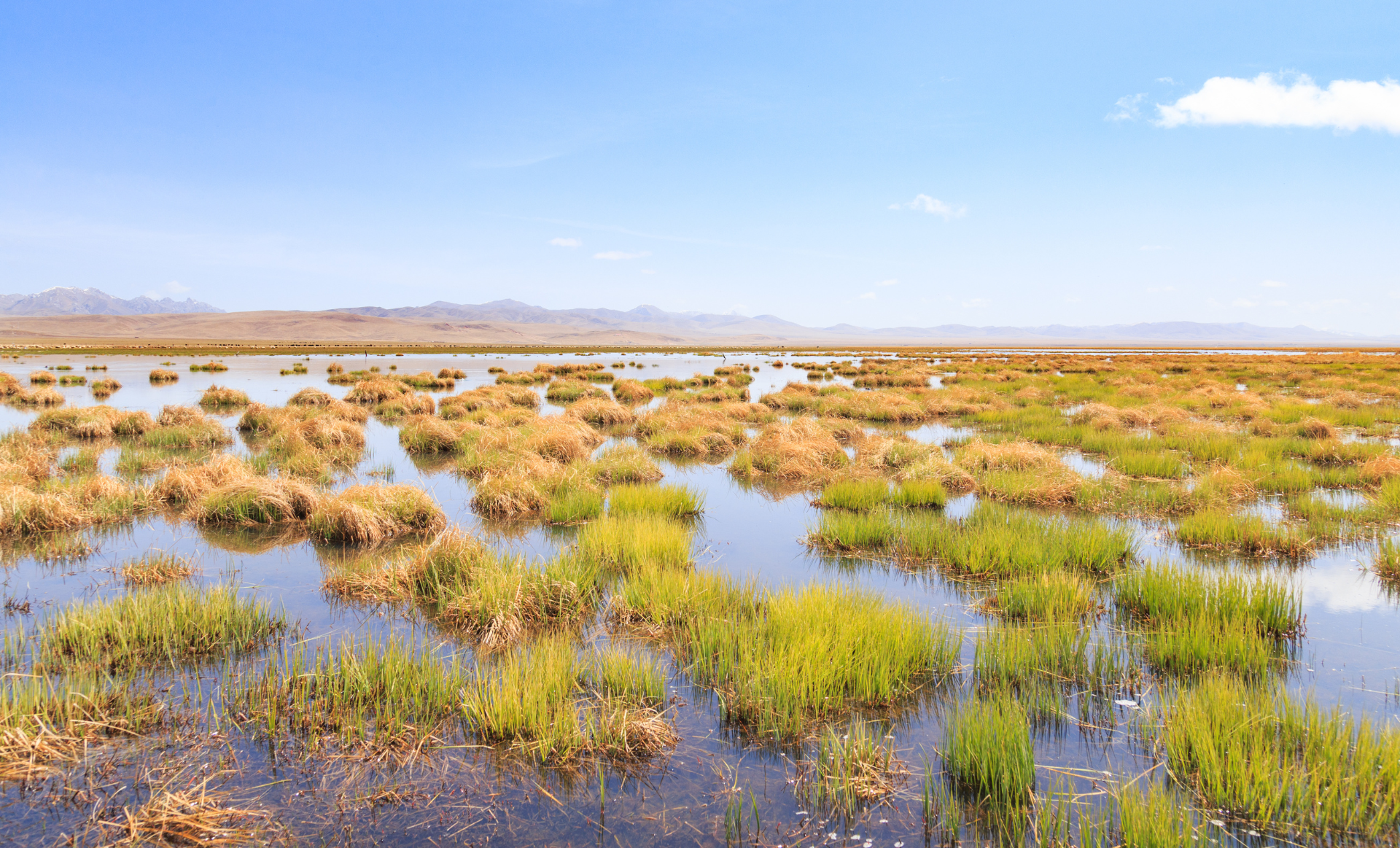
o Identify and preserve critical wetlands, together with
the water supply needed to maintain them. Restore degraded
wetlands.
o Set water flow and quality standards on a flexible seasonal
basis, to be regularly reviewed.
o Monitor biological resources in a comprehensive, ongoing
process.
o Honor state and federal agreements to protect the Bay-Delta
region and California's Wild and Scenic Rivers.
o Allocate water to protect and restore native anadromous
fish runs.
o Pursue the integrated management of agriculture and seasonal
wetlands.
Support water transfers that improve water efficiency,
enhance California's natural environment, and promote the
overall well being of rural communities.
o Develop fair standards for water transfers that do not
harm the environment or rural communities.
o Establish a fund, supported by fees on water transfers,
to mitigate adverse
impacts of transfers on rural economies, communities, and
the environment.
Encourage the far greater use of reclaimed water in
California through economic and regulatory incentives. Create
a statewide system of water data monitoring and exchange.
o Water data must be much more widely collected and distributed.
o Create an organization that collects, maintains, and freely
distributes state water
resources data.
Lifeline water allocations and rates should be implemented
for the residential sector. Integrate land-use planning
and water-use planning.
o All new urban developments must demonstrate a secure,
permanent supply of water before permits are approved.
o Protection of prime agricultural land and the water required
to support these lands should be studied.
Download the Executive Overview as a 100
KB PDF, Chapters 1-4 as a 4.7
MB PDF, and Chapters 5-9 as a 1
MB PDF.
Back to report
summary page.
-end-
|